Pazu Games
 Avatar World ®






Snapshot


Publisher DNA
What defines Pazu Games?
AI intelligence is not yet available for Pazu Games. The portfolio data below is up to date.
Portfolio
What does Pazu Games ship?
Apps
25 apps analysed

Analysis in progress

Analysis in progress

Analysis in progress

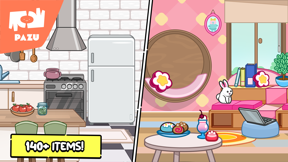
Create stories and build your own virtual world for your avatar!


Analysis in progress
Deep creative customization tools drive repeat sessions
- Creative freedom in character and home design keeps players engaged for long sessions
- In-game currency costs for premium sets feel prohibitively expensive for younger players
Distributed across 12 markets, strongest in Europe.
Based on 5 of 25 apps with localized market data, more coverage rolling in as scans complete · last scanned .
Americas (3)
- United States5 / 5
- Brazil3 / 5
- Mexico3 / 5
Europe (7)
- Italy3 / 5
- Netherlands3 / 5
- Portugal3 / 5
- Spain3 / 5
- France2 / 5
›+2 more europe markets
- Germany2 / 5
- Sweden2 / 5
Asia-Pacific (2)
- Japan3 / 5
- South Korea1 / 5
Core markets (5/5 apps)
User Sentiment
How do users feel about their apps?
1
Positive apps
0
Neutral / mixed
0
Negative apps
85/100
Avg sentiment score
Rivals
Who does Pazu Games compete with?
The rivals identified
Nemeses(2)


Both apps compete for the same demographic of mobile users seeking avatar-based self-expression and virtual world role-playing, creating direct overlap in creative customization features.


Expands on the avatar creation loop by integrating social networking and virtual life simulation elements.
Contenders(13)


Both apps compete for the same casual audience by offering avatar customization and home design within a virtual simulation environment.


Both apps compete for the same digital dollhouse sandbox audience, utilizing frequent content updates and creative roleplay mechanics to capture daily screen time.


IMVU competes for the same user time by offering 3D avatar customization and social interaction, though it targets a more mature social demographic compared to the kids-focused role-play environment of Avatar World.


Angela World competes for the same digital dollhouse audience by offering identical role-playing simulation mechanics, including character customization and interactive environment exploration.


Both apps compete for user time in the avatar-creation and virtual-world-exploration category, despite targeting different age demographics.


Both apps center on 3D avatar creation and virtual identity, competing for the same time-share of users interested in digital self-expression.


Both apps compete for the same demographic of users interested in avatar customization and virtual world exploration, despite differing in their social versus sandbox focus.


Both apps target the same digital dollhouse demographic with overlapping core mechanics like avatar customization and home design.


PlayWorld competes for the same digital dollhouse demographic as Avatar World, targeting the same creative roleplay sandbox market through interactive environments and character customization.


Both apps compete for the same audience interested in avatar customization and virtual space design, though they diverge on social versus sandbox play.


Focuses on the DIY fashion design aspect of avatar creation, appealing to the same creative demographic as Avatar World.


Both apps compete for the same creative sandbox audience by offering digital dollhouse roleplay and home design mechanics within a free-to-play model.


Both apps target the digital dollhouse roleplay market, competing for the same creative sandbox audience through avatar customization and home design mechanics.
Same space(31)


Targets social gamers with a chat-first interface that prioritizes relationship-building over complex world-building.


Offers an open-world roleplay environment that provides a more immersive city experience than the home-focused play of Avatar World.


Provides a simple tool for creating cartoon avatars, serving as a lightweight alternative for users who want quick profile images.


Introduces competitive catwalk battles that provide a goal-oriented alternative to the sandbox design of Avatar World.


Focuses on the specific dress-up and styling aspect of avatar creation within an anime aesthetic.


Gamifies the collection and unboxing process, offering a structured alternative to the open-ended design tools in Avatar World.


Serves as a specialized tool for social sharing that complements the broader role-playing experience found in Avatar World.

known for Avatar Creator App. Make your own Avatar
Targets the social media profile customization market with basic character design tools.


Targets the same creative styling audience as Avatar World but focuses on specific fashion themes rather than open-ended home design.


Shares the casual roleplay audience but focuses on narrative-driven city exploration rather than pure sandbox design.


Targets the same creative expression audience through a focused avatar-creation loop rather than a full world-building experience.


Captures the creative self-expression audience through AI-driven tools that contrast with the manual design approach of Avatar World.


Offers an open-world progression loop that appeals to users seeking more structured career and lifestyle management than Avatar World.


Mirrors the digital dollhouse and pretend play mechanics by offering interactive kitchen and bedroom environments.


Offers a similar virtual city roleplay experience with a focus on item interaction and avatar customization.


Offers a similar anime-style avatar creation interface but suffers from technical stagnation compared to the source app.


Offers a similar digital dollhouse experience centered on interactive castle scenes and dress-up activities.


Occupies the same digital dollhouse space but relies on a subscription-gated model that restricts content access.


Provides a focused anime-style dress-up tool for users interested in character design and social media avatars.


Extends the roleplay sandbox concept into specific professional settings like hospitals and police stations.


Provides a modular interface for generating original characters, targeting creative users rather than casual roleplayers.

known for Family Sim: Life Simulator
Focuses on multi-generational family management, offering a more structured narrative loop than the open-ended play of Avatar World.


Competes for the home design segment of the user base by offering 3D decoration tools and social interaction.


Uses choice-based narratives to drive family and home design, competing for the same casual simulation audience as Avatar World.


Provides a specialized garment editing tool that appeals to the fashion-focused segment of Avatar World's audience.


Provides a narrative-driven alternative to the open-ended play of Avatar World by using decision-based puzzle mechanics.


known for Real Life:Choices Simulator
Focuses on life path management and decision-making, providing a more analytical simulation experience than the creative play in Avatar World.


Competes for the casual simulation audience by adding productive loops like farming to the home design experience.


Shares the sandbox building audience but uses a distinct pink-aesthetic visual identity to differentiate from the digital dollhouse style.


Offers a similar girlish aesthetic and dress-up focus, directly competing for the same demographic as Avatar World.


Provides a specialized anime-style avatar creation tool for users seeking social media profile images.