My Town Games
For children aged 4-12 and their parents/caregivers who prioritize open-ended, non-competitive digital play.
 My Town : Home - Family Games








Snapshot
Who is My Town Games?
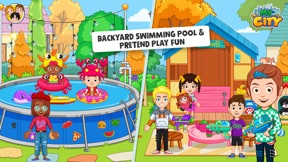
Providing children with a digital sandbox for open-ended role-play and creative storytelling. Enabling imaginative play through interconnected virtual dollhouse environments.
Target audience


Portfolio
Free 62Last updated

My Town : Home - Family Games
v7.03.02
8mo ago
Publisher DNA
What defines My Town Games?
Publisher DNA
Primary focus
Children's digital dollhouse and role-play games
Scale
studio
Target audience
Children aged 4-12 and their parents/caregivers who prioritize open-ended, non-competitive digital play.
Origin
Founded by Daniel Sonnenfeld and Mark Tulchinski, who were inspired to digitize the experience of playing with physical dollhouses.
Signature Patterns
- •Consistent use of open-ended, non-competitive sandbox gameplay mechanics.
- •Strong emphasis on cross-app connectivity allowing character and item migration.
- •Freemium monetization model across the majority of the portfolio.
- •Vibrant, consistent cartoon visual style optimized for young children.
- •High-frequency release and update cadence across both Education and Games categories.
Portfolio momentum
With 57 releases in the last 6 months and 51 out of 53 apps currently active, the publisher maintains a high-frequency update cycle across their entire catalog.
Portfolio
What does My Town Games ship?
Apps
94 apps analysed

- Ad-free, kid-safe environment builds parent trust

Multi-touch support expands collaborative play sessions
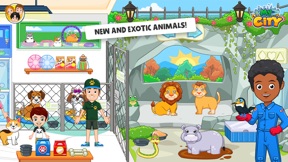
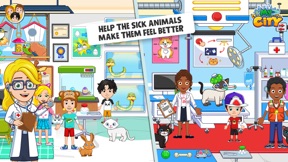
- Animal rescue and care simulation mechanics provide a rewarding experience for younger players
- Recent updates introduced unexpected animal species that clash with the established pet shelter theme

Educational value and detailed environments keep children engaged during long-form play sessions
- Open-ended roleplay mechanics allow younger players to create their own stories and scenarios freely
- Aggressive ad frequency interrupts the core gameplay loop and frustrates younger players during sessions


Analysis in progress
Distributed across 12 markets, strongest in Europe.
Based on 23 of 94 apps with localized market data, more coverage rolling in as scans complete · last scanned .
Americas (3)
- United States23 / 23
- Brazil18 / 23
- Mexico18 / 23
Europe (7)
- France19 / 23
- Italy19 / 23
- Netherlands19 / 23
- Portugal19 / 23
- Germany18 / 23
›+2 more europe markets
- Spain18 / 23
- Sweden18 / 23
Asia-Pacific (2)
- South Korea19 / 23
- Japan18 / 23
Core markets (23/23 apps)
User Sentiment
How do users feel about their apps?
13
Positive apps
4
Neutral / mixed
1
Negative apps
64/100
Avg sentiment score

Unlock the app dragging this portfolio down.
Access the full report for freeRivals
Who does My Town Games compete with?
The rivals identified
Nemeses(2)


Users report: Both titles target children with virtual city exploration and creative roleplay mechanics, competing directly for ad-supported free-to-play engagement.


Both apps compete for the same child audience within the digital dollhouse category, offering open-ended role-playing environments.
Contenders(5)


Users report: Both apps target the digital dollhouse category for children, competing for time spent in role-playing simulations.


Users report: Both apps target children aged 4-12 with digital dollhouse roleplaying mechanics, competing for the same casual play time.


Users report: Both apps occupy the digital dollhouse genre, targeting children with open-ended, non-competitive play environments that prioritize item interaction and exploration.


Both apps compete for toddler screen time by providing interactive pretend play environments within the digital toy category.


Both apps occupy the digital dollhouse category, providing virtual environments for children to interact with characters and objects. They compete directly for the same user base seeking open-ended role-playing experiences.
Same space(30)


Provides a digital sandbox for pretend play that competes for the same audience but suffers from technical stagnation.


Competes for the same early childhood audience by blending academic lessons with interactive puzzles.


Provides a structured curriculum-based learning path that functions as a formal educational alternative to open-ended exploration.


Provides structured educational modules for shapes and counting, serving as a supplement to open-ended play.


Offers structured learning modules that complement the open-ended play found in the source app.

known for MentalUP - Kids Learning Games
Offers brain games and fitness exercises that compete for the same educational screen time as My City.


Directly competes in the daycare simulation space with a focus on room management and baby care.


known for Preschool Games for Toddler 2+
Targets the same preschool demographic but focuses on an expert-guided curriculum rather than open-ended dollhouse simulation.


Shares the digital playset space but uses a subscription model to gate content, contrasting with the one-time purchase model of the source app.


Targets the preschool learning segment with a 3D character-led interface that teaches core concepts.


Offers a similar digital playground experience focused on character-based role-play and creative customization for children.


Provides an all-in-one educational platform for the same preschool age group, emphasizing offline accessibility.


Offers a straightforward simulator focused on room decoration and role-playing within a mansion setting.


Targets the same preschool demographic with research-backed learning content that prioritizes educational outcomes over free-form roleplay.


Competes for preschool screen time by offering a structured curriculum rather than open-ended dollhouse play.


Provides a sandbox-style simulation in an underwater theme, competing for the same role-playing audience.


Functions as a digital toy box for the same preschool age group, emphasizing safe, ad-free creative play.


Targets the same age demographic with a collection of legacy titles that compete for the user's limited screen time budget.


Operates in the same digital dollhouse category but emphasizes a connected world through cross-app integration.


Occupies the narrative-driven roleplay space, though it targets a more mature audience through branching storylines and character interaction.


Blends the digital dollhouse format with a structured educational curriculum for neurodivergent learners.


Offers a structured pet-themed simulation that contrasts with the open-ended nature of the source app.


Directly overlaps with the daycare simulation genre by providing a safe, open-ended digital space for roleplay.


Serves as a direct alternative for digital dollhouse play by providing a persistent sandbox for avatar and home design.


Shares the creative, open-ended play focus but uses photo-integration to personalize the character experience.

known for 123 Toddler games for 2+ years
Occupies the early childhood education space by offering specific skill-based islands for sorting and matching.


Uses physics-based mechanics to teach math, serving as a specialized educational alternative to general roleplay.


Focuses on intellectual skill development through mini-games, providing a more structured cognitive challenge than open-ended dollhouse play.


Focuses on vehicle-based roleplay, offering a more structured mission-based experience than the source app.

known for Baby Care Games. Kids Daycare
Targets the same daycare simulation audience by allowing users to act as a virtual babysitter.
The Analyst's Read
The bottom line on My Town Games
Bottom line
My Town Games has successfully leveraged a platform-based ecosystem to maintain high retention in the children's simulation market. Their ability to unify fragmented titles into a single, interconnected world provides a significant competitive advantage in user lifetime value.
Frequently asked questions
How many apps does My Town Games publish?
What kind of apps does My Town Games make?
What is My Town Games's top app?
In how many countries are My Town Games's apps available?
What fed this analysis
- Apps analyzed:
- 53
- With full intel:
- 0
- With overview:
- 53
- Website scraped:
- yes
- Social presence:
- yes