
Waymo
For urban commuters and tech-forward travelers looking for private, safe, and reliable transportation without a human driver.
 Waymo
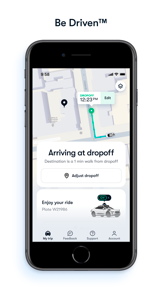
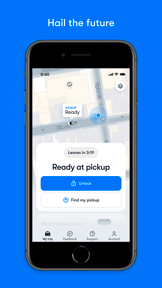
Waymo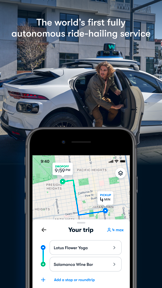

Snapshot
Who is Waymo?
Providing a fully autonomous ride-hailing experience for urban commuters seeking a private and safe alternative to traditional transport.
Target audience


Portfolio
Free 1Last updated

Waymo
v137
5mo ago
Publisher DNA
What defines Waymo?
Publisher DNA
Primary focus
Autonomous ride-hailing and transportation technology
Scale
indie
Target audience
Urban commuters and tech-forward travelers looking for private, safe, and reliable transportation without a human driver.
Portfolio momentum
Released 4 updates for their single flagship app in the last 6 months, with the most recent update occurring 9 days ago.
Portfolio
What does Waymo ship?
Apps
1 app analysed
All-electric fleet aligns with urban sustainability mandates
- Autonomous navigation provides a relaxing and stress-free alternative to human-operated rideshare services
- Restrictive device security requirements prevent users on custom operating systems from accessing the service
User Sentiment
How do users feel about their apps?
0
Positive apps
1
Neutral / mixed
0
Negative apps
65/100
Avg sentiment score
Rivals
Who does Waymo compete with?
The rivals identified
Nemeses(1)

Both apps compete for the urban commuter segment by offering on-demand ground transportation, though they diverge on the mechanism of delivery: Waymo relies on autonomous safety, while Freenow aggregates multi-modal human-driven transit.
Contenders(6)


Alto competes for the same urban commuter segment as Waymo by offering a curated, professionalized ride experience that prioritizes passenger control and predictable service timing.


Both services target urban mobility, but Freebee competes by offering a zero-cost, human-driven shuttle service that integrates local commerce deals, contrasting with Waymo's autonomous, paid model.


Bliq Driverless targets the same autonomous ride-booking audience as Waymo by offering scheduled trips and remote human supervision, directly challenging the on-demand, fully autonomous model.


Verne competes with Waymo by providing autonomous ride-hailing services, targeting urban commuters through a similar vehicle-hiring mechanism. The two services overlap in their core value proposition of replacing human-operated transportation with autonomous fleets.


Both services target urban residents seeking autonomous transportation, with Tesla utilizing its existing vehicle hardware to compete directly with Waymo's specialized ride-hailing fleet.


Both services compete for the same urban commuter segment by providing autonomous, all-electric ride-hailing transportation in select US markets.
Same space(18)


Competes for urban transit share by bundling micro-mobility and ride-hailing into a single interface.


Focuses on the micro-mobility niche, providing lightweight scooter access for short-distance urban travel.


Provides digital identity credentials that simplify airport security and age verification processes for travelers.


Connects users to licensed taxi fleets in major metro areas, providing a regulated alternative to autonomous ride-hailing.


Tracks autonomous vehicle fleets, providing enthusiasts with data on the growth of the robotaxi industry.


Acts as a global mobility platform for international travelers, allowing access to local taxi services without new app installs.


Serves as a primary transit alternative for commuters who need human-driven options when autonomous availability is limited.


Offers an official taxi booking service in Spain that guarantees regulated rates and professional drivers.


Targets international markets with a low-cost, multi-modal interface that includes delivery and logistics.


Addresses group transportation needs by providing high-capacity vehicles for social and business events.


Compares self-drive car rental options, serving travelers who prefer personal vehicle control over on-demand ride services.


Provides a basic ridesharing interface for users seeking affordable and reliable transportation.


Manages vehicle-specific functions for owners, serving as a companion for private electric vehicle users.


Offers a peer-to-peer vehicle marketplace that serves travelers needing specific car types rather than on-demand urban transit.


Captures transit intent through a multi-modal network that provides broader utility than the autonomous-only model.


Integrates local taxi dispatch with app-based requests to capture regional transit demand in the UK.


Operates as a P2P SaaS platform that prioritizes direct driver-passenger transactions to lower costs.


Aggregates mobility and delivery services in emerging markets, serving as a high-frequency utility for price-sensitive commuters.
Frequently asked questions
How many apps does Waymo publish?
What kind of apps does Waymo make?
What is Waymo's top app?
What fed this analysis
- Apps analyzed:
- 1
- With full intel:
- 1
- With overview:
- 1
- Website scraped:
- yes
- Social presence:
- yes