


XTEN
 UFL - Soccer Game 2026




Publisher DNA
What defines XTEN?
AI intelligence is not yet available for XTEN. The portfolio data below is up to date.
Portfolio
What does XTEN ship?
Apps
3 apps analysed

Analysis in progress

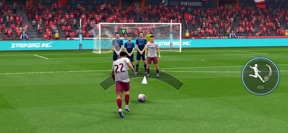
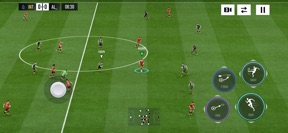
Build your dream football league team. Real football simulator!


Analysis in progress


Link-up squad management system incentivizes long-term team building through trait-based bonuses
- High-fidelity graphics and smooth gameplay performance create a realistic football simulation experience for mobile users
- Defensive artificial intelligence fails to provide adequate support or cover during critical match moments
Distributed across 10 markets, strongest in Europe.
Based on 3 of 3 apps with localized market data · last scanned .
Americas (3)
- United States3 / 3
- Brazil2 / 3
- Mexico2 / 3
Europe (5)
- France2 / 3
- Germany2 / 3
- Italy2 / 3
- Portugal2 / 3
- Spain2 / 3
Asia-Pacific (2)
- Japan2 / 3
- South Korea2 / 3
Core markets (3/3 apps)
User Sentiment
How do users feel about their apps?
1
Positive apps
0
Neutral / mixed
0
Negative apps
75/100
Avg sentiment score
Rivals
Who does XTEN compete with?
The rivals identified
Nemeses(1)


It competes for the American football simulation audience by focusing on college-level roster building and recruiting.
Contenders(9)


Both apps compete for the same mobile sports gamer demographic by offering football simulation, with UFL: Football Mobile Game 2026 emphasizing offline accessibility while Dream League Soccer 2026 relies on licensed player identities.


Both apps target the mobile soccer simulation market, competing for the same user base through free-to-play models.


Both apps target the mobile soccer simulation market with free-to-play models, competing for the same casual sports gaming audience.


Both apps target the mobile soccer simulation market with free-to-play models, competing for the same user base interested in tournament-style football gameplay.


Both apps target the mobile soccer simulation category, but they diverge on connectivity requirements: UFL - Soccer Game 2026 mandates live multiplayer, while Soccer League Football Strike enables offline play.


Both applications target the mobile soccer simulation market with free-to-play models, competing for the same casual sports gaming audience.


Both apps target the mobile soccer simulation market with offline-first architectures, creating direct competition for users seeking accessible, portable management experiences.


Both apps target the casual soccer simulation market, competing for the same player base through free-to-play career and match-based progression.


Both titles target the mobile soccer simulation market with free-to-play models, competing for the same user base interested in team management and match gameplay.
Same space(20)


It targets the management simulation audience by offering granular control over club facilities and squad tactics.


This app appeals to retro-gaming fans by offering a simplified, fast-paced management experience compared to modern simulations.


It serves the same tactical management segment by utilizing an official NFL PA license to attract users seeking authentic franchise-building experiences.


It captures the casual idle-management audience by using a swipe-based interface that differs from UFL's tactical simulation focus.


This app focuses on social team coordination and card-based mechanics rather than the direct skill-based simulation of UFL.


This app appeals to casual sports fans through idle mechanics that contrast with the active PvP focus of UFL.


It targets the casual arcade soccer player by offering tournament-style progression that functions offline.


It serves the tactical management audience by providing extensive global league coverage and a 3D match engine.


It differentiates from UFL by shifting the focus from team management to the specific role of the referee.


It addresses the data-driven segment of the soccer audience by integrating real-time match statistics directly into fantasy point calculations.


It serves the career-simulation segment by focusing on a single-player journey from youth to retirement.


It captures the casual arcade audience by prioritizing social club play over the tactical depth of UFL.


It competes for the long-term simulation audience by allowing save-data carry-over, which creates a high switching cost compared to UFL.


It provides a holistic management experience that combines administrative club oversight with active on-field squad gameplay.


It targets the same management-focused soccer audience but emphasizes a 28-day seasonal cycle and 3D match visualization to drive long-term retention.


This app provides a fast-paced, action-oriented alternative for players who prefer quick multiplayer matches over long-term simulation.


It captures the casual soccer audience by removing the internet connectivity requirement that UFL relies on for its global league features.


It serves the management simulation audience by using FIFPro licenses to provide an authentic roster-building experience.


It competes for the fantasy management audience by leveraging official player licenses from major global leagues.


This app targets the management simulation audience by shifting focus from match control to business-oriented club ownership.
New entrants(2)


This app targets the same management simulation audience but lacks the established user base or performance metrics of its rivals.


It targets the casual soccer audience by focusing on quick-session penalty shootouts and arcade-style goals.