


EatStreet
For hungry individuals, office workers, and university students in mid-sized U.S. cities seeking local dining options.
 EatStreet Local Food Delivery


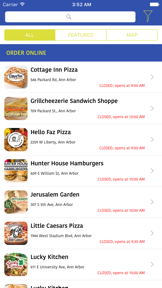


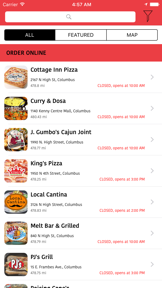


Snapshot
Who is EatStreet?
Providing a community-centric alternative to national food delivery platforms. Connecting users to local restaurants in mid-sized U.S. cities.
Target audience


Portfolio
Free 3Last updated

EatStreet Local Food Delivery
v3.12.0
2mo ago
Publisher DNA
What defines EatStreet?
Publisher DNA
Primary focus
Food & Drink delivery platforms
Scale
indie
Target audience
Hungry individuals, office workers, and university students in mid-sized U.S. cities seeking local dining options.
Origin
Founded in 2010.
Signature Patterns
- •Focus on hyper-local market penetration in college towns and mid-sized cities
- •Monetization driven by restaurant commissions and service fees rather than subscriptions
- •Utility-first feature set including group ordering and real-time tracking
- •Consistent focus on the Food & Drink category
Portfolio momentum
With only one release in the last six months and two of three apps showing no recent activity, the publisher is currently in a maintenance phase.
Company profile
medium confidence- Founded
- 2010
Portfolio
What does EatStreet ship?
Apps
3 apps analysed

Independent business model appeals to users preferring smaller startups.
- Independent business model appeals to users who prefer supporting smaller startups over large tech corporations
- Repeated order cancellations and missing deliveries without proactive communication or reliable customer service resolution

Single-market publisher, every app ships only to United States.
Based on 2 of 3 apps with localized market data, more coverage rolling in as scans complete · last scanned .
Americas (1)
- United States2 / 2
Core markets (2/2 apps)
User Sentiment
How do users feel about their apps?
0
Positive apps
0
Neutral / mixed
1
Negative apps
10/100
Avg sentiment score
Rivals
Who does EatStreet compete with?
The rivals identified
Nemeses(1)


Both platforms compete for the same urban and college-town delivery spend, with Postmates capturing broader retail and grocery demand while EatStreet focuses on local restaurant partnerships.
Contenders(8)


Both platforms compete for the same food delivery market share, with Deliveroo's subscription-based model and grocery integration directly challenging EatStreet's restaurant-only focus.


DoorDash competes for the same urban and suburban food delivery audience, using a subscription model to capture high-frequency spend that EatStreet lacks.


Both platforms target the restaurant delivery market, with Grubhub competing for the same group-ordering occasions EatStreet prioritizes through its fee-waiver threshold for orders over $50.


Both platforms target suburban and local-market consumers with a focus on independent restaurant partnerships, creating direct competition for regional delivery volume.


Both platforms target urban and college-based residents with a restaurant-focused delivery model, creating direct competition for the same dining-out budget.


Both platforms compete for the same local food delivery audience in the U.S. market, specifically targeting consumers who prefer independent restaurant options over national chains.


Wolt competes for the same on-demand delivery market share, with its multi-category expansion and subscription model directly threatening EatStreet's restaurant-only, non-subscription service.


Both platforms compete for the same food delivery spend in urban environments, with Wonder targeting East Coast families through a zero-fee model while EatStreet focuses on college towns.
Same space(17)


Bopple provides a local takeaway ordering utility that competes for the same restaurant-focused audience as EatStreet.


Buffalo Wild Wings targets the same sports-themed dining audience as EatStreet, relying on loyalty tiers to drive repeat orders.


Caviar targets a premium dining segment, contrasting with EatStreet's focus on local-diner and college-town accessibility.


Bwangu Delivery aggregates multiple categories into one interface, competing for the same local convenience demand as EatStreet.


efood acts as a regional aggregator in Greece, offering a similar multi-category marketplace structure to EatStreet.


eMeals provides meal planning utility that complements the grocery delivery services EatStreet lacks.


KFC US operates as a direct sales channel, competing for the same loyalty-focused fast-food audience as EatStreet.


Snappy Shopper focuses on hyper-local grocery delivery, providing a speed-based alternative to EatStreet's restaurant delivery.


Orders2me offers a registration-free ordering flow, providing a lower-friction alternative to EatStreet's account-based model.


Papa Johns competes for the same delivery-focused audience as EatStreet but utilizes a national loyalty-driven retention loop.


Pizza Hut serves as a direct-sales channel for a national chain, contrasting with EatStreet's local-diner marketplace model.


Kuick serves as a local delivery aggregator, offering a similar restaurant-discovery interface to EatStreet.


Villa Eats provides a niche delivery and booking utility for a specific geographic location, mirroring EatStreet's local focus.


Sheetz integrates food ordering and loyalty into a single digital companion, mirroring EatStreet's focus on local convenience.


Shipt provides a premium grocery delivery service that competes for the same household spend as EatStreet's restaurant-only model.


Taco Bell captures value-conscious diners through digital-first exclusives, overlapping with EatStreet's college-student demographic.


Wendy’s operates as a high-frequency utility for quick-service transactions, competing for the same daily active usage as EatStreet.
The Analyst's Read
The bottom line on EatStreet
Bottom line
EatStreet occupies a niche regional position that relies on community-level density rather than national scale. Their long-term viability depends on their ability to defend these specific local markets against the consolidation of larger delivery aggregators.
Frequently asked questions
How many apps does EatStreet publish?
What kind of apps does EatStreet make?
What is EatStreet's top app?
In how many countries are EatStreet's apps available?
What fed this analysis
- Apps analyzed:
- 3
- With full intel:
- 1
- With overview:
- 3
- Website scraped:
- yes
- Social presence:
- yes
