


FALCON GAMES
 Goods Puzzle: Sort Challenge™






Publisher DNA
What defines FALCON GAMES?
AI intelligence is not yet available for FALCON GAMES. The portfolio data below is up to date.
Portfolio
What does FALCON GAMES ship?
Apps
6 apps analysed

Simple and colorful visual design makes the game accessible and enjoyable for casual play sessions
- The core organizing gameplay loop provides a relaxing and addictive experience for players seeking stress relief
- Recent updates cause total loss of player progress and level resets which discourages long-term engagement

Analysis in progress

Analysis in progress
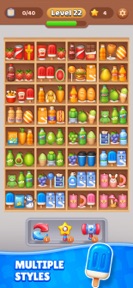
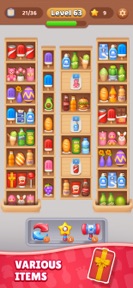
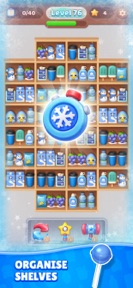
Drag, rearrange, match goods. Discover an addictive sort puzzle matching game


Optional ad-based rewards allow players to progress without mandatory interruptions if they choose to participate
- Core puzzle mechanics provide a satisfying and challenging experience for players seeking daily mental stimulation
- Excessive frequency and duration of unskippable ads disrupt the flow and make the game feel unplayable

Analysis in progress
Distributed across 11 markets, strongest in Europe.
Based on 3 of 6 apps with localized market data, more coverage rolling in as scans complete · last scanned .
Americas (3)
- United States3 / 3
- Brazil2 / 3
- Mexico2 / 3
Europe (6)
- France2 / 3
- Germany2 / 3
- Italy2 / 3
- Portugal2 / 3
- Spain2 / 3
›+1 more europe market
- Sweden1 / 3
Asia-Pacific (2)
- Japan2 / 3
- South Korea2 / 3
Core markets (3/3 apps)
User Sentiment
How do users feel about their apps?
1
Positive apps
1
Neutral / mixed
1
Negative apps
52/100
Avg sentiment score

Unlock the app dragging this portfolio down.
Access the full report for freeRivals
Who does FALCON GAMES compete with?
The rivals identified
Nemeses(2)

Both apps compete for the same casual puzzle audience by offering session-based gameplay within the mobile puzzle category. They directly clash for user time-share through distinct monetization models and core loop mechanics.


Both apps target casual puzzle gamers through matching mechanics and booster-driven monetization models. Homescapes competes directly for this audience's time by layering a narrative renovation loop over the core puzzle engine.
Contenders(15)


Both apps target casual puzzle gamers with freemium models, though Gummy Drop! pairs its core loop with a virtual travel meta-game.


Both apps target casual gamers with sorting and matching mechanics, competing for the same session-based puzzle time.


Both apps compete for casual puzzle gamers using freemium models, though they diverge in core gameplay between 3D sorting and narrative match-3 mechanics.


Provides a similar Zen-like sorting experience that attracts adult players seeking cognitive training and stress relief.


Both apps target the same casual puzzle demographic with session-based sorting and matching mechanics, competing for time in the same hyper-casual market segment.


Both apps compete directly for casual puzzle gamers seeking short-session stress relief, relying heavily on ad-supported freemium models to monetize daily engagement.


Both apps target the casual sorting puzzle demographic by utilizing identical 3D shelf-clearing mechanics and freemium monetization models.


This app targets the same casual puzzle demographic with a lightweight 3D sorting loop, sharing the source app's reliance on ad-monetization.


Shares the casual 3D matching space, competing for the same short-session, stress-relief audience.


Both apps target casual puzzle gamers through identical sorting mechanics and share a monetization model heavily reliant on forced ad-frequency and difficulty spikes.


Both apps target casual gamers through a core sorting mechanic, creating direct competition for short-session engagement within the same puzzle category.


Both apps target casual gamers through sorting and matching mechanics, competing directly for the same session-based puzzle audience.


Both apps target the same casual puzzle audience by offering short, session-based 3D sorting and matching gameplay. They compete directly for the same time-filling entertainment use case.


Both apps target casual puzzle players with ad-supported, session-based gameplay, creating direct competition for the same user attention span.


Both apps compete for casual puzzle players through freemium matching mechanics and ad-supported progression. Clockmaker targets this audience with a narrative match-3 loop, while Goods Puzzle focuses on 3D sorting challenges.
Same space(20)


This app targets the same casual puzzle audience by applying a logic-based stacking mechanic to color-matching, similar to the source app's sorting loop.


This app targets the same casual sorting audience with a market-themed 3D puzzle, though it currently struggles with low user sentiment.


This app targets the same casual puzzle audience through a scavenger hunt loop, though it shares the source app's vulnerability to ad-driven churn.


This app competes for the same casual puzzle audience by using haptic feedback to differentiate its tactile sorting experience.


This app targets the same casual sorting demographic by emphasizing a tidy, stress-free environment without timers.


This app targets the same casual puzzle audience by offering a variety of logic-based sorting tasks, though it faces technical stability issues.


This app serves the same casual puzzle audience by combining traffic management with triple-match mechanics, offering a similar stress-relief value proposition.


Operates in the same color-sorting genre, appealing to users who prefer offline-first, low-stimulation gameplay.


This app competes for the same casual puzzle demographic by shifting the sorting mechanic into a traffic-jam theme to maintain engagement.


This app competes for the same casual puzzle audience by focusing on themed scavenger hunt maps, offering a different visual search mechanic.


This app competes for the same casual puzzle audience but demonstrates the risks of removing core features, such as room decoration, which the source app currently lacks.


This app competes for the same casual puzzle audience, maintaining a high-frequency update cadence that contrasts with the source app's maintenance mode.


This app competes for the same casual sorting demographic by adding a kingdom-building meta-layer to the core 3D sorting loop.


This app targets the same casual sorting demographic by focusing on a factory-themed 3D puzzle environment.


This app competes for the same casual sorting demographic by combining triple-match mechanics with a large library of 3D-rendered items.


This app competes for the same casual puzzle audience by offering offline-first hidden object matching, which provides a distinct alternative to the source app's online-dependent model.


This app serves the same casual sorting demographic, sharing the source app's struggle to balance stress-relief design with aggressive monetization.


Shares the color-sorting mechanic, targeting players looking for simple, one-finger brain training puzzles.


This app competes for the same casual puzzle base by utilizing a 3D triple-match loop that functions entirely offline, avoiding the connectivity issues of the source app.


This app serves the same casual sorting audience but suffers from similar monetization friction, making it a direct peer in terms of user sentiment risk.
