HEY CLAY
For parents and caregivers seeking interactive, educational, and creative activities for preschool-aged children.
 HEY CLAY®









Snapshot
Who is HEY CLAY?
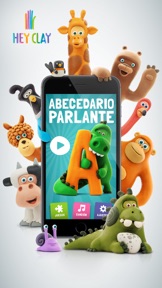
Bridging digital interaction with physical tactile play to support early childhood development. Helping children learn through creative, clay-based modeling and interactive alphabet exploration.
Target audience


Portfolio
Free 4Last updated

HEY CLAY®
v2.12.18.32311
6mo ago
Publisher DNA
What defines HEY CLAY?
Publisher DNA
Primary focus
Children's educational apps · creative arts and literacy
Scale
indie
Target audience
Parents and caregivers seeking interactive, educational, and creative activities for preschool-aged children.
Signature Patterns
- •Consistent use of clay-animation visual style across all educational titles.
- •Integration of interactive mini-games and musical elements to reinforce learning.
- •Focus on early literacy and creative motor skills for preschool-aged children.
- •Mixed monetization strategy utilizing both paid upfront and freemium models.
Portfolio momentum
Released 11 updates across the portfolio in the last 6 months with active maintenance on core titles.
Portfolio
What does HEY CLAY ship?
Apps
10 apps analysed

Physical-to-digital QR integration creates a direct B2B conversion funnel
- The core creative concept of the clay animation app remains engaging for younger children
- Frequent application crashes during the letter to animal animation sequence prevent basic usage

- Interactive song-based gameplay provides engaging experiences for young children during their daily play sessions
- Application crashes immediately upon launch prevent users from accessing the content they purchased

Ad-free, child-safe design builds long-term parent trust
- The educational concept provides a fun way for children to learn the French alphabet structure
- Frequent application crashes during use disrupt the learning experience for children on mobile devices

Americas-centric footprint across 2 markets.
Based on 4 of 10 apps with localized market data, more coverage rolling in as scans complete · last scanned .
Americas (2)
- United States4 / 4
- Brazil1 / 4
Core markets (4/4 apps)
User Sentiment
How do users feel about their apps?
0
Positive apps
0
Neutral / mixed
3
Negative apps
20/100
Avg sentiment score
Unlock the app dragging this portfolio down.
Access the full report for freeRivals
Who does HEY CLAY compete with?
The rivals identified
Nemeses(4)


Both applications target the early childhood literacy market, competing for the same preschool and kindergarten demographic through interactive game-based learning.


Users report: Both apps compete for the same early childhood education time slot, targeting parents looking to facilitate literacy development for children aged 3-8.


Both apps compete for the same parent demographic seeking structured early childhood literacy tools, with both products focusing on active, game-based learning environments.


Both apps compete for the early childhood literacy market, with Talking ABC offering a one-time purchase model while Lingokids captures users through a subscription-based approach.
Contenders(25)


SplashLearn provides an adaptive K-5 environment that serves as a long-term progression path for children who outgrow the alphabet lessons of Sprechendes ABC.


Shares the same core focus on gamified alphabet literacy and letter recognition.


Both apps target early childhood education through alphabet-themed content, competing for the same parent-purchaser demographic.


Both apps compete for the same preschool demographic by offering educational content designed to build early childhood academic skills.


Users report: Both apps target early alphabet literacy for young children, creating direct competition for parents seeking foundational reading tools.


Users report: Both apps target young children for phonics and alphabet literacy, competing for the same parent demographic seeking structured educational content.


Both apps compete for the same Russian language learning audience by offering free, accessible educational content for beginners.


Both apps target early childhood alphabet education at the same 2.99 dollar price point, creating direct competition for parents seeking interactive learning tools.


Both apps target beginners learning the Russian alphabet through free, basic tools designed for foundational character recognition.


Both apps compete for the same preschool demographic by offering foundational literacy and cognitive development games.


Both apps target users learning the Russian alphabet, offering free access to foundational Cyrillic character recognition and audio-guided pronunciation.


Both apps target preschool literacy, forcing a choice between the tactile plastimation of Abecedario Parlante and the narrative-driven literacy curriculum of Kids Reading Games.


Both apps target early childhood literacy through animal-themed educational content and subscription models, competing for the same parent demographic seeking supplemental learning tools.


Both apps target early childhood alphabet learning through interactive play, creating a direct overlap in the preschool education segment. The competition centers on whether parents prefer tactile physical-to-digital integration or free, screen-only digital puzzles.


Both apps target users learning the Russian alphabet, with the rival focusing on phonetic pronunciation and stroke practice while the source app emphasizes visual engagement through clay-animation characters.


Both apps target Spanish-speaking preschoolers for early literacy, with the rival offering a free, high-volume alternative to the paid plastimation model.


Users report: Both apps target young children learning the Russian alphabet, competing for time and attention in the early childhood education category.


Both apps target the preschool demographic for early literacy, creating direct competition for screen time among parents seeking educational content.


Both apps target early childhood alphabet education through interactive play, though they differ in language focus and visual style. They compete for the same parent demographic seeking foundational literacy tools.


known for Kids Russian ABC alphabets book for preschool Kindergarten & toddlers boys & girls with free phonics & nursery rhyme game style song as an educational app for montessori learn to read letters flash cards fun by sound sight & touch to improve vocabulary.
Users report: Both apps target preschool children learning the Russian alphabet and are free to download, creating direct competition for parents seeking foundational literacy tools.


Users report: Both apps target young children learning the alphabet, creating direct competition for parents seeking early education tools with similar core curriculum goals.


Both apps target the same early childhood literacy demographic, competing directly for screen time through alphabet-focused educational content.

known for 123 Toddler games for 2+ years
Both apps target the early childhood education market, competing for parents seeking foundational learning tools for toddlers.


Both apps target the early childhood education segment, competing for parental attention by offering distinct, safe digital play experiences for children aged 2 to 6.


Users report: Both apps target preschool children for Russian alphabet education, competing for the same parent-driven download intent in the education category.
Same space(44)


Serves as a conversational alternative to static alphabet apps by using a voice-recognition engine for one-on-one tutoring.


Montessori Preschool provides a more comprehensive curriculum library than Sprechendes ABC, targeting the same early-childhood developmental stage.


Provides a free, ad-free literacy curriculum that acts as a broader reading companion to alphabet-focused tools.


Targets the same preschool demographic but uses high-affinity licensed IP to drive monetization and retention.


Khan Academy Kids competes for the same early-learning audience by offering a non-profit, standards-aligned alternative to the paid model of Sprechendes ABC.


Reading Eggs offers a more extensive, multi-program suite that expands upon the basic phonics and alphabet learning found in Sprechendes ABC.


Offers a structured, multi-subject curriculum that acts as a long-term progression path once children master basic alphabet sounds.


known for Educational games kids 2-3-4-5
Focuses on foundational cognitive skills like sorting and classification that precede or complement letter recognition.


Pok Pok offers a Montessori-inspired alternative to the structured alphabet lessons of Sprechendes ABC, focusing on open-ended play.


It provides a more advanced academic progression for the same user base, focusing on math rather than the source app's alphabet-learning focus.

known for Hindi Alphabet - An app for children to learn Hindi Alphabet in fun and easy way.
Offers a language-specific alphabet learning tool that mirrors the source app's focus on simple, ad-free education.


Provides a similar character-based approach to teaching the alphabet, though focused on English.


Offers a broad suite of early childhood activities that complement alphabet learning with counting and time-telling modules.


Shares the same focus on alphabet learning but uses interactive hide-and-seek gameplay to differentiate from standard flashcard-style apps.


cabuu serves as a more advanced vocabulary trainer for students, moving beyond the foundational alphabet learning of Sprechendes ABC.


Offers religious audio content for families, competing for the same screen time within the education category.


Directly competes in the Spanish alphabet learning space, offering similar letter-sound correspondence tools.

known for Russian animals alphabet
Directly overlaps with the source app's focus on the Russian alphabet and character-driven learning.


Targets the same early literacy audience but focuses on phonics sounds rather than general alphabet recognition.


Targets the same Russian-speaking early-literacy market with a focus on independent reading.


Users report: Targets the parents of the children using the source app, providing educational resources for the family unit.


Focuses on early Spanish literacy, providing a structured lesson-based approach for the same age demographic.


Epic provides a digital library that complements the alphabet-focused content of Sprechendes ABC with a broader range of reading materials.


Provides a static reference for Spanish pronunciation, serving as a legacy tool for older learners.


Provides a systematic synthetic phonics approach that serves as a pedagogical alternative to the clay-animation style of alphabet apps.


Letters leren lezen groep 3 provides a phonics-focused alternative for early literacy that mirrors the source app's one-time purchase model.


Provides a static reference for Spanish grammar, serving as a utility for older learners compared to the source app.


Targets the same early-literacy demographic with a focus on handwriting and tracing mechanics.


Expands the educational scope beyond alphabet recognition into logic and math puzzles for the same preschool age group.


Provides a comprehensive, adaptive learning platform that scales from basic shapes to advanced phonics.


Phonixo reader offers a phonics-based curriculum that utilizes a drag-and-drop interface for word construction instead of the source app's animation style.


Offers specialized handwriting practice that complements the literacy goals of the source app.


Uses narrative-driven paths to teach core concepts, providing a more immersive alternative to the static alphabet focus.


Acts as a language utility for Spanish speakers, contrasting with the preschool-focused content of the source app.


Uses the same character-driven, playful aesthetic to teach logic rather than literacy.


known for
Uses the same character-driven, playful aesthetic to teach logic rather than literacy.


This app serves the same early-stage development demographic but focuses on motor skills and sensory feedback rather than letter recognition.


Baby Shark World for Kids leverages popular IP to provide a broader content library than the focused alphabet curriculum of Sprechendes ABC.


Supplements alphabet learning by providing an animal-focused exploration environment that teaches geography and science.


Game to learn Brazilian shares the offline-first design philosophy but focuses on vocabulary acquisition rather than foundational alphabet phonics.


Acts as a direct alternative for alphabet learning by pairing letters with images to simplify the acquisition process.


Functions as a legacy, zero-cost alternative for basic alphabet and number recognition.


Serves as an institutional-grade literacy tool that competes for the same preschool audience through B2B distribution.


Focuses on the same tactile, creative play experience as the source app but without the technical instability.
New entrants(1)


Provides an interactive language learning experience that contrasts with the source app's static plastimation model.
The Analyst's Read
The bottom line on HEY CLAY
Bottom line
Hey Clay maintains a stable niche in the educational space by pairing distinct visual branding with simple, repetitive learning mechanics. Their ability to bridge digital instruction with physical play provides a defensible value proposition for parents in the early childhood education market.
Frequently asked questions
How many apps does HEY CLAY publish?
What kind of apps does HEY CLAY make?
What is HEY CLAY's top app?
In how many countries are HEY CLAY's apps available?
What fed this analysis
- Apps analyzed:
- 10
- With full intel:
- 0
- With overview:
- 10
- Website scraped:
- yes
- Social presence:
- yes