Acevector
For budget-conscious Indian consumers, particularly in regional areas, seeking affordable fashion and home essentials with Cash on Delivery options.
 Snapdeal Trendy Budget Fashion
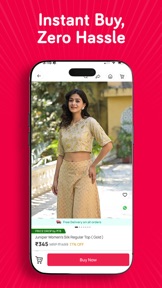

Snapshot
Who is Acevector?
Providing budget-conscious Indian shoppers with an affordable, multi-language e-commerce marketplace for fashion and home essentials.
Target audience


Portfolio
Free 1Last updated

Snapdeal Trendy Budget Fashion
v8.3.5
5mo ago
Publisher DNA
What defines Acevector?
Publisher DNA
Primary focus
E-commerce marketplace for budget fashion and home goods
Scale
indie
Target audience
Budget-conscious Indian consumers, particularly in regional areas, seeking affordable fashion and home essentials with Cash on Delivery options.
Portfolio momentum
Released 10 updates for their flagship app in the last 6 months, with the most recent deployment occurring within the last 4 days.
Company profile
low confidence- Headquarters
- India
Portfolio
What does Acevector ship?
Apps
1 app analysed
Online Shopping App: Clothes For Men, Women, Kids | Fashion, Beauty & Home Decor


8-language localization lowers distribution barriers in India
- Competitive pricing and frequent deals keep budget-conscious shoppers returning for daily household needs
- Users report receiving fake or low-quality products that do not match the advertised images
Single-market publisher, every app ships only to United States.
Based on 1 of 1 app with localized market data · last scanned .
Americas (1)
- United States1 / 1
Core markets (1/1 apps)
User Sentiment
How do users feel about their apps?
0
Positive apps
1
Neutral / mixed
0
Negative apps
45/100
Avg sentiment score
Rivals
Who does Acevector compete with?
The rivals identified
Nemeses(1)


Both platforms target budget-conscious shoppers with high-volume, low-cost inventory, creating direct competition for the same price-sensitive demographic.
Contenders(8)


Both platforms compete for the Indian fashion retail market, targeting consumers through distinct price points and brand positioning. They overlap in the fashion and apparel category, forcing a choice between mass-market budget deals and premium international brand authenticity.


Both platforms target budget-conscious shoppers seeking discounted goods, with Snapdeal focusing on mass-market volume and BUDDY utilizing an AI-negotiated pricing engine for local brands.


Both platforms target budget-conscious shoppers through high-frequency inventory and daily deals, competing for the same consumer mindset despite geographic separation.


Both apps compete for the Indian fashion retail market, targeting budget-conscious shoppers through high-volume, mobile-first shopping experiences.


Both apps compete for the Indian fashion e-commerce market, targeting overlapping user bases seeking apparel and home goods through mobile-first shopping experiences.


Both apps target budget-conscious fashion shoppers through low-cost inventory models and frequent deal cycles. They compete for the same price-sensitive demographic seeking affordable apparel and accessories.


Both platforms target budget-conscious consumers seeking fashion and home essentials, competing for the same retail wallet share through discount-driven models.


Both platforms compete for fashion retail market share, though they target distinct geographic segments and price tiers through different logistics models.
Same space(20)


Competes for the same fashion-conscious users as Snapdeal, but differentiates through a massive brand catalog and personalized feeds.


Serves the same lifestyle-conscious segment as Snapdeal, but uses a loyalty-gated access model to drive repeat purchases.


Offers a local alternative for the same budget-conscious users who trade personal items without the platform-managed logistics of Snapdeal.


Competes for the same fashion-conscious demographic by offering a massive multi-brand catalog that dwarfs Snapdeal's inventory breadth.


Provides a direct-to-consumer retail alternative for fashion shoppers who prefer branded collections over Snapdeal's marketplace.


Targets the same fashion-focused audience as Snapdeal but uses a social-first discovery model to drive engagement.


Addresses the same fashion-conscious segment as Snapdeal, but focuses on solving fit issues through tailor-made measurements.


Targets the same budget-conscious fashion segment as Snapdeal, focusing on a specific price-point strategy.


Serves the same local-discovery segment as Snapdeal, though it uses a subscription model that contrasts with Snapdeal's free-to-list approach.


Serves the same fashion-resale audience as Snapdeal, focusing on a curated marketplace for pre-loved and new items.


Targets the same fashion-focused demographic as Snapdeal, focusing on curated designer and vintage apparel.


Provides a direct-to-consumer fashion alternative for users who prefer a curated brand experience over Snapdeal's marketplace model.


Serves the same local-classifieds segment as Snapdeal, but uses a minimalist listing flow to capture casual sellers.


Targets the same fashion and home goods segment as Snapdeal, focusing on a streamlined search experience for everyday basics.


Offers a similar retail catalog to Snapdeal, focusing on mobile-first browsing for fashion and home goods.


Competes for the same local-marketplace audience as Snapdeal, utilizing a high-speed listing mechanism to maintain inventory liquidity.


Competes for the same fashion-resale audience as Snapdeal, utilizing live-stream auctions to drive transaction volume.


Targets the same young, fashion-conscious audience as Snapdeal, utilizing high-frequency flash sales to drive retention.


Captures the same budget-minded fashion shoppers as Snapdeal by removing seller fees to maximize inventory volume.


Targets the same bargain-hunting and collector demographic as Snapdeal, but uses gamified live auctions to drive high-frequency engagement.
Frequently asked questions
How many apps does Acevector publish?
What kind of apps does Acevector make?
What is Acevector's top app?
In how many countries are Acevector's apps available?
What fed this analysis
- Apps analyzed:
- 1
- With full intel:
- 1
- With overview:
- 1
- Website scraped:
- yes
- Social presence:
- no