


Volcano Technology
For smart home users, construction professionals, and facility managers seeking centralized control over connected devices and infrastructure.
 SmartLife- Smart Living
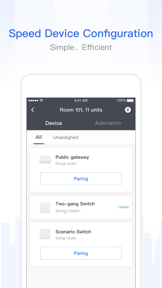
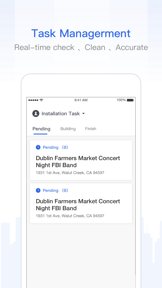


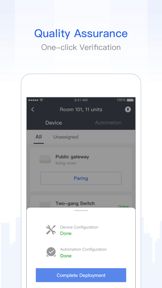


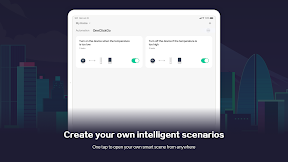


Snapshot
Who is Volcano Technology?
Providing a unified IoT management platform for smart home device control and automated lifestyle scheduling. Enabling users to monitor security, energy, and home environments through a centralized interface.
Target audience


Portfolio
Free 4Last updated

SmartLife- Smart Living
v7.10.0
3mo ago
Publisher DNA
What defines Volcano Technology?
Publisher DNA
Primary focus
IoT management and smart home utility platforms
Scale
indie
Target audience
Smart home users, construction professionals, and facility managers seeking centralized control over connected devices and infrastructure.
Signature Patterns
- •Centralized device management and scene configuration
- •Integration of energy monitoring and security alerts
- •Freemium and free-tier pricing models
- •Focus on B2B2C utility and facility management tools
Portfolio momentum
Released 13 updates across 3 apps in the last 6 months, indicating a high-frequency development cycle focused on platform stability.
Portfolio
What does Volcano Technology ship?
Apps
4 apps analysed

Centralized IoT management drives daily session frequency
- Long-term users report consistent functionality across multiple years of ownership for their connected home devices
- Aggressive advertising and AI-focused feature bloat disrupt the core utility of controlling home appliances

- The core functionality of controlling smart home devices provided utility for users over several years
- Forced integration of AI features and promotional clutter obscures the primary device control interface

Distributed across 4 markets, strongest in Americas.
Based on 4 of 4 apps with localized market data · last scanned .
Americas (2)
- United States4 / 4
- Mexico2 / 4
Europe (1)
- Spain2 / 4
Asia-Pacific (1)
- Japan2 / 4
Core markets (4/4 apps)
User Sentiment
How do users feel about their apps?
0
Positive apps
0
Neutral / mixed
2
Negative apps
25/100
Avg sentiment score
Unlock the app dragging this portfolio down.
Access the full report for freeRivals
Who does Volcano Technology compete with?
The rivals identified
Nemeses(2)


Tuya Smart shares a similar broad-hardware compatibility model with SmartLife but attempts to monetize its user base through intrusive AI-driven lifestyle tools.


Both apps function as centralized hubs for smart home device management, competing for the same budget-conscious user base seeking unified control over diverse IoT hardware.
Contenders(13)


Both apps compete for the same smart home automation market, targeting users who require a centralized hub to manage and schedule various IoT devices.


Both apps compete for the same smart home management audience, with SmartLife offering vendor-agnostic control while Alexa provides deep integration with Echo hardware and e-commerce services.


Both apps function as centralized IoT hubs for smart home management, competing for the same user base of smart home enthusiasts seeking device control and automation.


Both apps compete for the same smart home control audience, with SmartLife offering vendor-agnostic flexibility while Xiaomi Home provides a proprietary, hardware-integrated experience.


Both apps compete for the same smart home user base by providing centralized control interfaces for IoT hardware and automated device management.


Both apps target smart home users requiring remote device management and automation, creating direct competition for the same home-automation user base.


DREO competes by providing a dedicated IoT control interface for its specific hardware, directly overlapping with the core device management utility of SmartLife.


IKEA Home smart functions as an ecosystem-specific controller for IKEA hardware, offering a simplified scene-based automation experience compared to SmartLife.


Both apps compete for the same smart home user base by providing centralized IoT control, with SmartLife offering vendor-agnostic management while LG ThinQ focuses on native hardware diagnostics.


Both apps function as centralized control hubs for IoT hardware, competing directly for the same smart home user base. They overlap in their core utility of managing connected devices and configuring home automation scenarios.


Both applications function as centralized management hubs for IoT home devices, competing for users seeking mobile control over security and lighting hardware.


Both apps compete for the same user base seeking centralized IoT control, with both currently struggling with connection instability and interface clutter that disrupts daily device management.


Kasa Smart provides a centralized management platform for TP-Link hardware, serving as a direct alternative for users who prefer a dedicated ecosystem over SmartLife's agnostic approach.
Same space(21)


A3 Smart Home competes in the professional-monitoring segment, offering a level of reliability and security oversight that SmartLife's DIY-focused hub does not provide.


Controller for HomeKit targets the power-user segment of the Apple ecosystem, offering technical diagnostic tools that SmartLife lacks.


Royse Home Automation serves as a niche utility for legacy IR device control, offering a stable, hardware-tethered experience that contrasts with SmartLife's broader feature set.


eWeLink acts as a direct platform competitor by supporting multiple hardware brands and smart speaker integrations.


CozyLife Smart offers a privacy-focused, account-free alternative to SmartLife, targeting users who prioritize data anonymity over cloud-based features.


Eve for Matter & HomeKit offers a comprehensive management interface for Matter-enabled devices, focusing on granular automation that appeals to users seeking more control than SmartLife provides.


Home Connect focuses on kitchen-specific appliance management rather than the broad IoT device aggregation found in SmartLife.


The Home app acts as a primary OS-level orchestrator for Apple and Google ecosystems, competing with SmartLife by embedding control directly into the device's operating system.


SMART+ targets the lighting-specific segment of the smart home market, contrasting with SmartLife's broader device management.


Miele provides a premium appliance-specific control layer that prioritizes usage data over the general IoT aggregation of SmartLife.


Home Assistant serves as a privacy-focused, local-first alternative for power users who reject the cloud-dependent architecture of SmartLife.


eufy Clean provides a narrow, appliance-specific management interface that contrasts with SmartLife's goal of being a centralized, multi-brand hub.


Ring serves as a specialized security-focused alternative to the general IoT management provided by SmartLife.


Sengled Home provides specialized energy tracking for lighting hardware, but its reliance on cloud authentication creates reliability issues similar to those found in SmartLife.


Shelly Smart Control provides flexible local and cloud-based management for Shelly hardware, appealing to users who want to avoid the cloud-only limitations of SmartLife.


SmartHome (MSmartHome) offers a proprietary appliance-control utility that competes with SmartLife by providing deeper energy monitoring for Midea-affiliated hardware.


Philips Hue acts as a specialized hardware-centric controller for lighting, providing a reliable alternative to SmartLife's broader, multi-brand automation hub.


Sky Smart Home bundles security hardware with broadband contracts, creating a distribution-led model that differs from SmartLife's standalone app approach.


T-Life functions as a carrier-locked lifestyle portal that competes for user attention by bundling account management with rewards, contrasting with SmartLife's vendor-agnostic hardware focus.


TELUS SmartHome provides a bundled security and automation service for subscribers, contrasting with SmartLife's free, vendor-agnostic model.


Magic Home Pro provides a basic, hardware-tethered interface for LED lighting, serving as a low-complexity alternative to SmartLife's multi-functional hub.
The Analyst's Read
The bottom line on Volcano Technology
Bottom line
Volcano Technology Limited has successfully scaled a primary consumer IoT platform while diversifying into niche professional utility tools. Their high release velocity and strong user engagement suggest a mature, stable product ecosystem.
Frequently asked questions
How many apps does Volcano Technology publish?
What kind of apps does Volcano Technology make?
What is Volcano Technology's top app?
In how many countries are Volcano Technology's apps available?
What fed this analysis
- Apps analyzed:
- 3
- With full intel:
- 0
- With overview:
- 3
- Website scraped:
- yes
- Social presence:
- no
