


Easybrain
For adults and seniors seeking stress relief, memory exercise, and creative outlets through low-intensity, high-volume gameplay.
 Pixel Art - Color by Number




Snapshot
Who is Easybrain?
Providing casual gamers and puzzle enthusiasts with accessible, meditative brain-training experiences to decompress and stay mentally active.
Target audience


Portfolio
Free 28Last updated

Pixel Art - Color by Number
v10.7.0
7mo ago
Publisher DNA
What defines Easybrain?
Publisher DNA
Primary focus
Meditative logic and classic puzzle games
Scale
studio
Target audience
Adults and seniors seeking stress relief, memory exercise, and creative outlets through low-intensity, high-volume gameplay.
Signature Patterns
- •Hybridization of classic mechanics, such as Sudoku-Block or Jigsaw-Coloring fusions.
- •Heavy reliance on ad-supported freemium models with high-priced ($14.99–$18.00) ad-removal tiers.
- •Extensive use of live-ops including Daily Challenges, Seasonal Events, and meta-games like 'Flower Garden'.
- •Consistent 'Zen' and 'Stress Relief' value propositions across diverse puzzle sub-genres.
- •High-frequency update cycle to maintain content volume and technical stability.
Portfolio momentum
The publisher maintains an exceptionally high development cadence, having shipped 73 updates across its 27 active apps in the last six months.
Portfolio
What does Easybrain ship?
Apps
28 apps analysed

Offline-first design removes connectivity dependency for broader market access
- The three dimensional puzzle mechanics provide a refreshing and challenging experience compared to standard two dimensional games
- Overly sensitive touch controls frequently register incorrect arrow selections leading to unfair loss of lives

Tap away arrows to escape the maze. Train your brain with smart puzzle games!
Strong 'Zen' brand positioning
- Engaging Gameplay
- Excessive Advertising

Original take on jigsaw puzzles! Put puzzle pieces correctly to reveal pictures!
Hand-drawn aesthetic art style sustains engagement for casual players
- Relaxing and simple puzzle mechanics provide a satisfying daily routine for casual players
- Excessive ad frequency during and between puzzle steps disrupts the relaxing gameplay experience

Train your brain with classic backgammon and become the lord of this board game!
- The core backgammon gameplay loop provides a relaxing and intuitive experience for casual players
- Users report the dice algorithm is biased to favor the computer opponent during matches

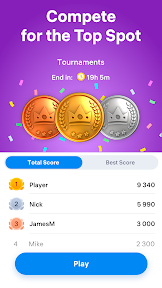
Robust competitive features (Tournaments/Leaderboards)
- Engaging Gameplay
- Excessive Advertising
Distributed across 20 markets, strongest in Europe.
Based on 15 of 28 apps with localized market data, more coverage rolling in as scans complete · last scanned .
Americas (4)
- Brazil15 / 15
- Mexico15 / 15
- United States15 / 15
- Canada14 / 15
Europe (9)
- France15 / 15
- Germany15 / 15
- Italy15 / 15
- Portugal15 / 15
- Spain15 / 15
›+4 more europe markets
- Sweden15 / 15
- Netherlands14 / 15
- Turkey11 / 15
- United Kingdom11 / 15
Asia-Pacific (7)
- Japan15 / 15
- South Korea15 / 15
- Australia11 / 15
- India11 / 15
- Indonesia11 / 15
›+2 more asia-pacific markets
- Singapore11 / 15
- Vietnam11 / 15
Core markets (15/15 apps)
User Sentiment
How do users feel about their apps?
9
Positive apps
9
Neutral / mixed
9
Negative apps
49/100
Avg sentiment score

Unlock the app dragging this portfolio down.
Access the full report for freeRivals
Who does Easybrain compete with?
The rivals identified
Nemeses(9)


Both applications target casual puzzle enthusiasts seeking stress relief through jigsaw-style mechanics and free-to-play models.


Both apps target the same casual spatial-logic puzzle audience with identical core mechanics, creating direct competition for daily active users.


Jigsaw Drop: Solitaire Puzzle serves the same casual demographic as Arrow Puzzle by combining jigsaw and block mechanics into a relaxing, offline-capable experience.


Competes for the same relaxation-focused casual gamer segment through tactile puzzle-solving.


Both apps target the backgammon board game category, competing for the same casual strategy player base through free-to-play models.


Both apps compete for the same casual puzzle audience by offering block-placement mechanics on an 8x8 grid.


This app maintains the largest active user base within the direct brick-breaking genre while keeping a consistent update cadence.


This app maintains the highest market share in the direct block-sudoku hybrid niche with over 1.1 million ratings and consistent update frequency.


Both apps target the same casual puzzle audience seeking stress-relief, with Art Puzzle focusing on aesthetic coloring-jigsaw hybrids and Jigsaw Puzzles for Adults HD on narrative-driven jigsaw progression.
Contenders(30)


Ball Sort Puzzle competes for the same zen-seeking audience as Arrow Puzzle by offering a logic-based sorting loop that prioritizes stress relief.


Both apps compete for the same casual puzzle audience by combining jigsaw assembly with coloring mechanics.


Sand Fill: Block Puzzle offers a unique color-and-shape matching mechanic that serves as an adjacent alternative to the logic puzzles in Arrow Puzzle.


A long-standing direct competitor that focuses heavily on the 'finger drumming' community and high-quality preset packs.
Differentiators
- Niche focus on drum pad apps allows for deep community engagement
- Consistent quality in audio engineering and sample pack curation


Both apps compete for the casual puzzle audience by offering grid-based block placement mechanics that prioritize brain training and stress relief.


Both apps target the same casual brain-training demographic and utilize identical grid-based block-clearing mechanics to drive daily engagement.


Directly targets the same block-sudoku hybrid audience with a similar feature set and monetization model.


Both apps target the same casual puzzle demographic seeking stress relief, with Art Puzzle focusing on aesthetic coloring and Jigsaw Puzzle: Daily Puzzles on a daily content loop.


Both apps compete for the casual logic-puzzle audience by offering grid-based spatial reasoning challenges that function as daily mental exercises.


Maze Escape competes for the same casual puzzle audience by positioning itself as a low-pressure alternative to the high-frequency ad environment found in Blockudoku.


Block Blast! competes directly for the same casual puzzle audience by offering grid-based block placement mechanics. Both apps target users seeking short, repeatable brain-training sessions during downtime.


Both apps compete for the same casual puzzle audience by offering free, stress-relief gameplay centered on visual jigsaw mechanics.


Both apps target the casual logic-puzzle segment, competing for the same daily mental-reset ritual through grid-based deduction mechanics.


Both apps target the casual brain-training segment with hybrid grid-placement mechanics, forcing users to choose between Blockudoku's live-service content and the rival's offline-first utility.


A more professional alternative that bridges the gap between a simple pad machine and a full mobile DAW.
Differentiators
- Decades of experience in professional DJ and music production software
- High technical standards for audio latency and processing


Both apps target the casual brain-training puzzle segment using 10x10 grid mechanics, creating direct competition for users seeking stress-relief gaming.


Both apps target the same casual logic-puzzle audience by utilizing grid-clearing mechanics centered on directional movement. They compete directly for the same daily-habit segment within the logic puzzle category.


Both apps target the casual puzzle market with free-to-play models, competing for the same user base seeking stress-relief through digital jigsaw mechanics.


Both apps compete for the same casual logic-puzzle audience by offering grid-based clearing mechanics that occupy short daily sessions.


Both apps utilize identical tap-away logic mechanics to target the casual puzzle audience. They compete directly for user time within the same free-to-play category.


High development velocity with 13 releases in six months indicates a rapid feature-testing strategy.


A long-standing title in the genre that retains a loyal user base through stable, classic mechanics.


Both apps target casual puzzle gamers with spatial-logic mechanics, creating direct competition for daily session time within the tap-away puzzle category.


Both apps target casual logic puzzle players, competing for daily session time through distinct mechanics: minimalist spatial logic versus narrative-driven lateral thinking.


Both apps target the same casual puzzle demographic using identical 9x9 grid mechanics and block-clearing loops to drive daily engagement.


Both apps target casual logic-puzzle players with minimalist grid-clearing mechanics, creating direct competition for daily session time.


Both apps compete for the same casual puzzle audience by offering spatial-reasoning logic loops for daily mental relaxation.


A strong direct competitor in the block-puzzle space with a massive user base and high satisfaction ratings.


Directly overlaps with the jigsaw category but scales through a massive community-driven content library.


Both apps target the casual block puzzle segment with identical grid-clearing mechanics, competing for the same user base seeking stress-relief and brain training.
Same space(71)


Targets the same meditative puzzle audience using tactile 3D sorting instead of 2D jigsaw coloring.


Water Sort! Color Sort Puzzle serves the same audience as Arrow Puzzle by providing a relaxing, logic-based sorting experience with a meta-game progression system.


Yarn Fever! Unravel Puzzle targets the same casual puzzle audience as Arrow Puzzle by blending logic-based sorting with ASMR-inspired sensory feedback.


Shares the casual, low-stimulation puzzle space, though it uses a sorting logic engine instead of art assembly.
Differentiators
- Early dominance in the sorting category with massive organic reach
- Portfolio of simple, highly addictive logic puzzles


Competes for the same relaxation-seeking casual audience with a minimalist, meditative puzzle loop.


Brain Puzzle 3: Crazy Mind targets the same casual puzzle audience by offering a variety of logic and memory challenges that serve as a mental workout.


Point Out: Color Escape Puzzle competes for the same casual puzzle audience by offering grid-based logic challenges that prioritize offline accessibility.


Hole Stars: Puzzle Game shares the same casual puzzle space as Arrow Puzzle by offering a satisfying, addictive core loop based on collecting mechanics.


Tap Tile! serves as a direct adjacent competitor by providing a similar calming, tap-based puzzle experience that prioritizes relaxation over high-pressure mechanics.


Color Block Run - Puzzle Game targets the same casual puzzle audience as Arrow Puzzle by focusing on spatial thinking and logic-based block movement.


Shares the casual puzzle audience by using a repetitive sorting mechanic instead of jigsaw coloring.


Cube Land Puzzle Game offers a voxel-based 3D logic experience that serves as a visual alternative to the 3D grid puzzles found in Arrow Puzzle.


Brain Test: Tricky Puzzles captures the same casual puzzle audience by offering a high-frequency, logic-based challenge that complements the cognitive training aspect of Arrow Puzzle.


Shares the core ball-and-block physics interaction but pivots the gameplay into an endless runner sub-genre.


This app targets the same casual board game demographic by offering progressive difficulty levels and online competitive play.


The industry standard for mobile DJing; while it focuses on mixing tracks, its 'Sampler' and 'Looper' modes directly overlap with DPM's core use case.
Differentiators
- Multiple Apple Design Award winner with elite brand prestige
- Deep hardware integration with physical DJ controllers


It serves as a secondary casual puzzle option for users who enjoy the repetitive, pattern-matching nature of block games but prefer tile-based aesthetics.


Directly competes for the same anti-stress, art-focused puzzle demographic through polygonal assembly.


A social music creation platform that includes a 'Looper' feature very similar to DPM, but within a collaborative social network.
Differentiators
- Massive ecosystem including cloud storage and artist services
- Strong focus on the 'creator economy' rather than just utility


This app competes directly for the same backgammon player base by emphasizing social tournament-based progression.


Shares the pathfinding puzzle subject, competing for the same casual audience seeking low-pressure brain training.


Focuses on the physics-based puzzle aspect of the category rather than the traditional arcade brick-breaking format.


Operates in the adjacent 'sorting' puzzle sub-genre with high update velocity.


Targets the same casual puzzle audience with precision-driven logic sorting instead of jigsaw coloring.


Targets the same casual brain-training audience with a focus on cognitive evaluation.


Captures the same relaxing, tactile puzzle audience through a shape-based creative loop.


This app targets the same backgammon player base by emphasizing community connection and real-time multiplayer matches.


Uses a similar 3D spatial rotation mechanic but adds a meta-game layer to extend session length.


This app targets the same casual board game audience by offering multi-mode digital versions of classic games.


Serves the same offline-first, casual puzzle demographic with a tangram-style grid mechanic.


Targets the same casual logic puzzle audience with a similar tap-away mechanic.


This app serves the same casual offline-first board game audience by providing adaptive AI and classic mechanics.


This app serves the same casual backgammon audience by providing both point-based and credit-based online matches.


Competes for the same casual 3D puzzle audience with block-clearing mechanics.


Appeals to the same aesthetic-driven puzzle audience by combining pixel art with city-building progression.


Offers a similar art-based puzzle experience but focuses on sliding and dragging tiles.


Block Blast! competes for the same casual puzzle audience by offering an offline-first grid experience that functions as a primary alternative to Arrow Puzzle's stress-free logic loop.


Shares the same directional arrow logic puzzle subject, appealing to the same brain-training audience.


Shares the 3D cube tap-away subject, appealing to the same casual puzzle-solving demographic.


Color Block: Combo Blast provides a lightweight, battery-friendly grid puzzle experience that appeals to the same casual demographic as Arrow Puzzle.


Competes for the same casual puzzle audience with a 3D cube rotation and clearing mechanic.


This app occupies the same brain-training space, providing a standard Sudoku experience that serves as a direct substitute for users seeking traditional number logic.


This app competes for the same backgammon audience by providing advanced educational tools and neural network-based AI.


This app serves the same casual board game audience by providing a completely free, ad-free experience.


This app competes for the same traditionalist backgammon audience by offering a high-fidelity engine that mirrors classic mechanics.


It competes for the same logic-puzzle segment by offering a grid-based placement mechanic that serves as a direct alternative to Sudoku-style gameplay.


Targets the same casual 3D puzzle audience with a focus on observation and spatial planning.


Uses classic art themes similar to the source app but applies a sliding puzzle mechanic.


This app captures the same casual board game audience by focusing on fast-paced social dice play and community features.


This app competes for the same casual board game audience by offering a collection of classic titles in an offline-first interface.


Offers similar 3D spatial puzzle mechanics, targeting users interested in casual brain-training.


This app targets the same backgammon enthusiasts by offering social features like live chat and team-based competition.


It leverages a massive, decade-long user history to maintain a competitive social presence, directly challenging the source app's tournament-based retention.


Word Connect Association targets the same casual brain-training demographic as Crossword Master by offering logic-based word-chain puzzles rather than grid-based crossword formats.


Targets the same casual logic puzzle audience with a variation on the tap-to-clear mechanic.


This app serves as an adjacent social board game experience that captures the same casual dice-rolling interest as the source app.


Targets the same casual puzzle demographic with a similar 3D spatial rotation mechanic.


Appeals to the same casual puzzle audience through a similar logic-based grid-clearing mechanic.


Color Slide - Hexa Puzzle offers a hexagonal grid alternative to the square-grid puzzles in Arrow Puzzle, targeting the same logic-focused casual audience.


Shares the same tile removal puzzle subject, appealing to casual logic puzzle players.


This app caters to the same niche of traditional tabletop board game players who prefer rules-accurate adaptations.


Targets the same casual 3D puzzle audience with directional logic challenges.


Shares the 3D spatial puzzle subject, competing for the same casual, short-session player base.


This app targets the same competitive backgammon audience by offering skill-based analysis and global leaderboards.


Shares the same tile removal puzzle subject, targeting casual players.


Targets the same relaxation-seeking audience with an atmospheric, color-focused puzzle loop.


This app serves the same casual board game audience by bundling multiple classic tabletop games into one interface.


This app competes for the same backgammon audience by offering high-stakes tournament systems and expert-level boards.


This app targets the same backgammon audience by offering visual customization and Game Center integration.


Block Crush! functions as a grid-based puzzle alternative that shares the same target audience as Arrow Puzzle by emphasizing relaxing, thoughtful block placement.


This app competes for the same backgammon player base by offering both offline practice and online PvP matches.
New entrants(8)


Block Out! - Color Sort Puzzle serves the same casual puzzle audience as Arrow Puzzle by offering a dynamic, ever-changing block-sliding experience.


This app competes for the same backgammon audience by focusing on a strictly faithful, rule-accurate experience.


Targets the same casual puzzle audience with a focus on quiet, meditative logic-solving.


Targets the same casual puzzle audience through a diamond painting and gem-sorting mechanic.


An innovative sampler and sequencer designed by a prominent music influencer, targeting the next generation of mobile producers.
Differentiators
- Strong influencer backing (Andrew Huang) providing built-in marketing and tutorials
- Focus on 'fun' and 'speed' in the music creation process


Targets the same casual puzzle audience by blending jewel sorting with pixel art creation.


This app competes for the same commuter-focused audience by prioritizing offline-first logic puzzles that do not require an active data connection.


Shares the arrow puzzle subject, offering a variety of logic-based challenges for casual players.
The Analyst's Read
The bottom line on Easybrain
Bottom line
Easybrain is a powerhouse in the casual logic space, leveraging a high-volume content strategy and classic IP to capture the adult demographic. Their ability to maintain high weighted ratings across a large portfolio suggests a refined product-market fit, though aggressive monetization remains a key risk factor for long-term user sentiment.
Frequently asked questions
How many apps does Easybrain publish?
What kind of apps does Easybrain make?
What is Easybrain's top app?
In how many countries are Easybrain's apps available?
What fed this analysis
- Apps analyzed:
- 27
- With full intel:
- 27
- With overview:
- 27
- Website scraped:
- yes
- Social presence:
- yes
